
Record the location safely
From a dry, safe position, note the property frontage, timing, recent rain, and whether indoor fixtures are backing up. Photographs can help the provider identify the opening. Do not remove heavy covers, enter pits, or touch contaminated water to investigate.
Arrange the right assessment
Contact a plumber for the private drainage system and notify Philadelphia Water about a suspected public issue or street hazard. Ask the provider to identify the component rather than assuming the vent itself is the cause. A downstream restriction may force water out at an upstream opening.
Ask what proves the repair is complete
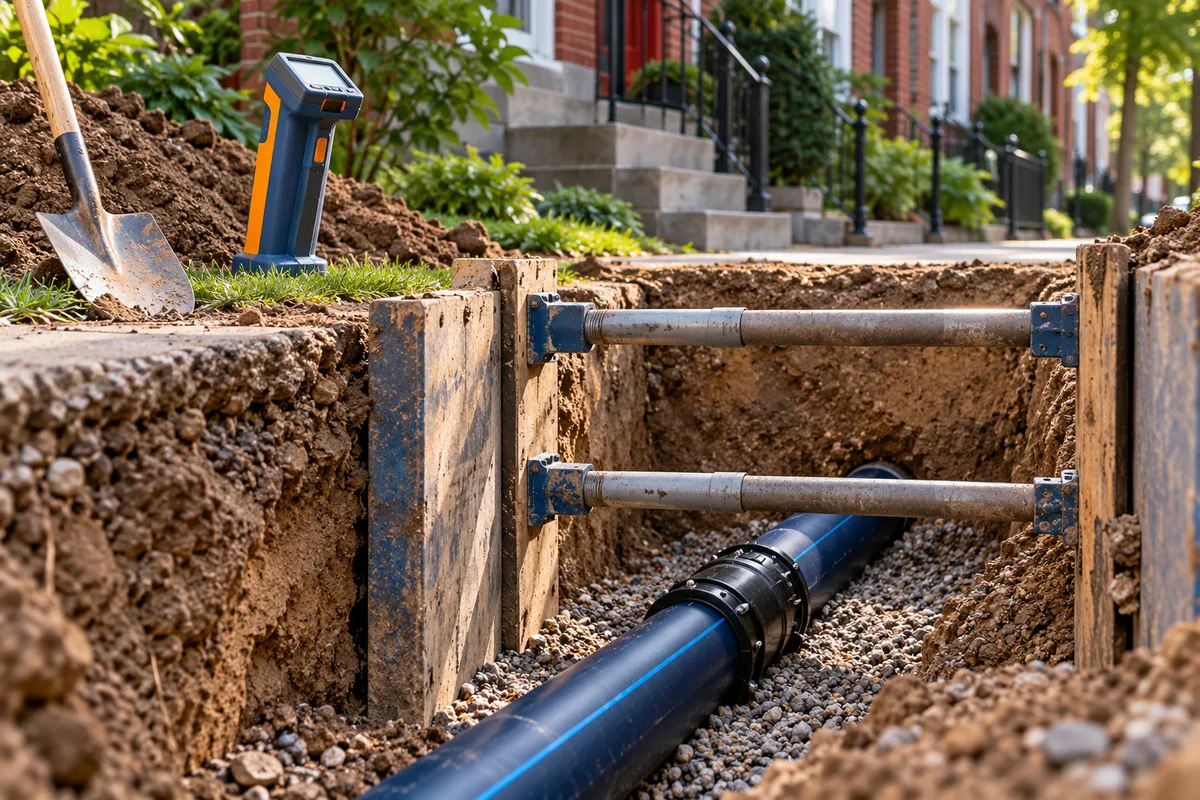
Restoring flow should be followed by an appropriate assessment of the accessible route. Request a written finding and any recording, including limits of the survey. If a trap or lateral repair is proposed, have the affected section marked before work and include surface reinstatement.
Your next-step checklist
- Avoid the discharge and reduce water use
- Report the exact frontage and symptoms
- Ask for the cause rather than a cap-only fix
Discuss the next step for your property
For a Philadelphia service enquiry, call (267) 740-0245. Describe the symptoms, the address, and any inspection findings. Ask about Philadelphia curb trap repair and confirm provider availability before arranging work.
This guide describes a problem scenario, not a completed customer job. It is general information, not a diagnosis, engineering design, coverage decision, or legal advice.
- Philadelphia Water: customer responsibilities ↗
- City of Philadelphia: Notice of Plumbing Defect ↗
- City of Philadelphia L&I: current applicable plumbing codes ↗
Confirm current requirements with the responsible department and the provider assessing your property.